Overview
In this Design-Based Learning project (4GA50) at TU Eindhoven, our team of 7 designed and built a solar heat system to heat water using an artificial sun, following Cradle-to-Cradle (C2C) sustainability principles. The project combined physical prototyping with a MATLAB numerical model to predict and optimize thermal performance.
Design
The system consists of two main components:
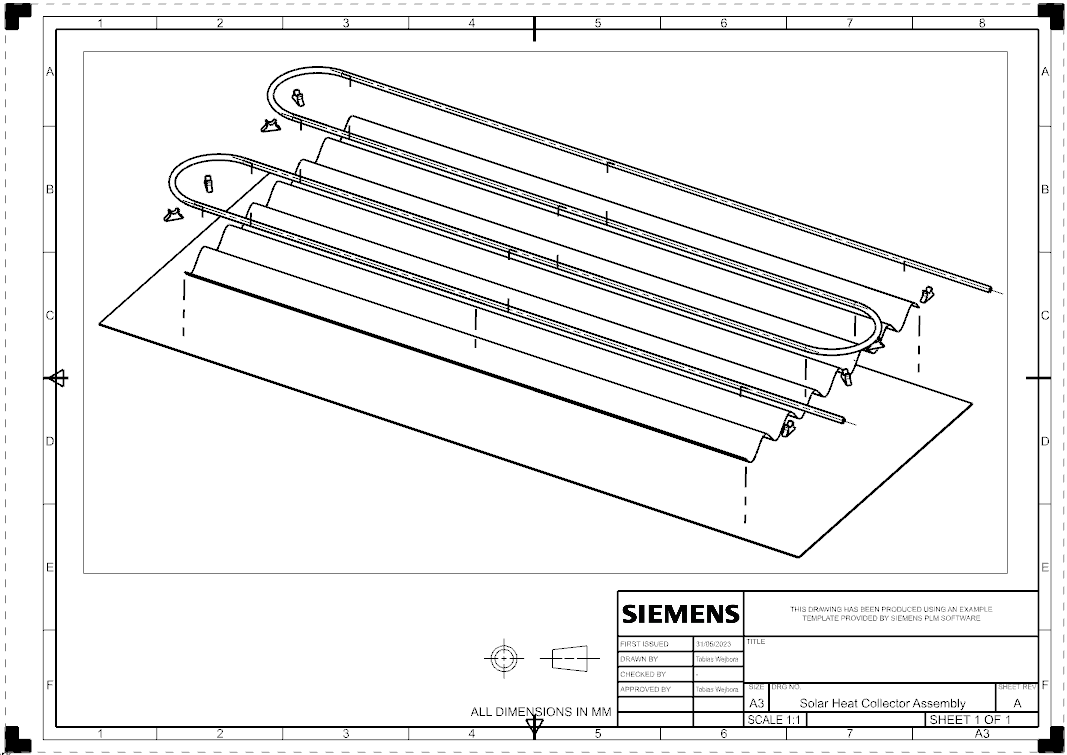
Solar Collector
- Copper piping (5.5 m, 12 mm outer diameter) bent into a serpentine pattern
- Bitumen sheet coated with aluminium tape acting as a reflective mirror
- 3D-printed standoffs to position pipes at the focal point of reflected rays
- Insulated collector box to minimize heat loss
Heat Storage Vessel
- Minimized water volume to maximize temperature rise
- Maximized insulation thickness around the vessel
- Designed for easy disassembly (C2C compliance)
MATLAB Numerical Model
The thermal model computes the temperature rise over time by summing thermal resistances in series:
The model accounts for:
- Incoming heat flux from the artificial sun
- Reflection efficiency of the aluminium tape (~75% of reflected rays hit the copper pipe)
- Thermal resistances through copper, water, and insulation
- Convective and radiative heat losses to surroundings
Parameter Optimization
We tested three copper pipe configurations:
| Design | Outer Diameter | Length | Final Temperature |
|---|---|---|---|
| Copper 1 | 22 mm | 2.7 m | 43.9 C |
| Copper 2 | 15 mm | 4.4 m | 48.1 C |
| Copper 3 | 12 mm | 5.5 m | 49.3 C |
The 12 mm pipes with maximum length won — more surface area for heat transfer outweighed the slightly higher flow resistance.
Results
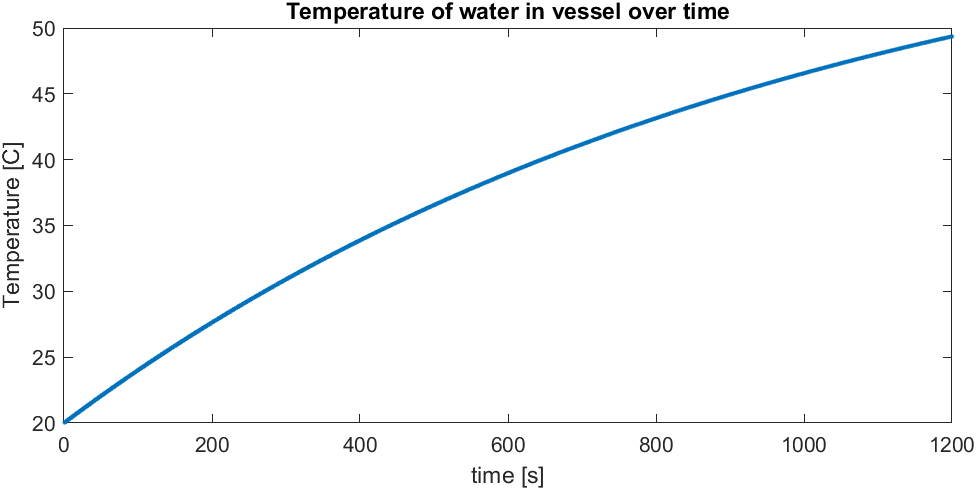
The model predicted a maximum water temperature of 49.3 C with 9.4% overall system efficiency. During physical testing, the target of 50 C was not quite reached, but the model closely matched experimental trends. The main source of discrepancy was imperfect copper bending — off-center pipes missed the focal point of the reflective mirror.
Results & Discussion
The reflective mirror concept was the most creative part of this design — using ray optics principles to concentrate heat onto the pipes. The parameter optimization loop (model, predict, compare, iterate) was a practical introduction to model-based engineering design. The C2C constraint forced us to think about material choices and disassembly from the start, which is a valuable design mindset.
Technologies Used
MATLAB (thermal modeling, parameter optimization), copper piping, aluminium tape, 3D printing, insulation materials, LaTeX